
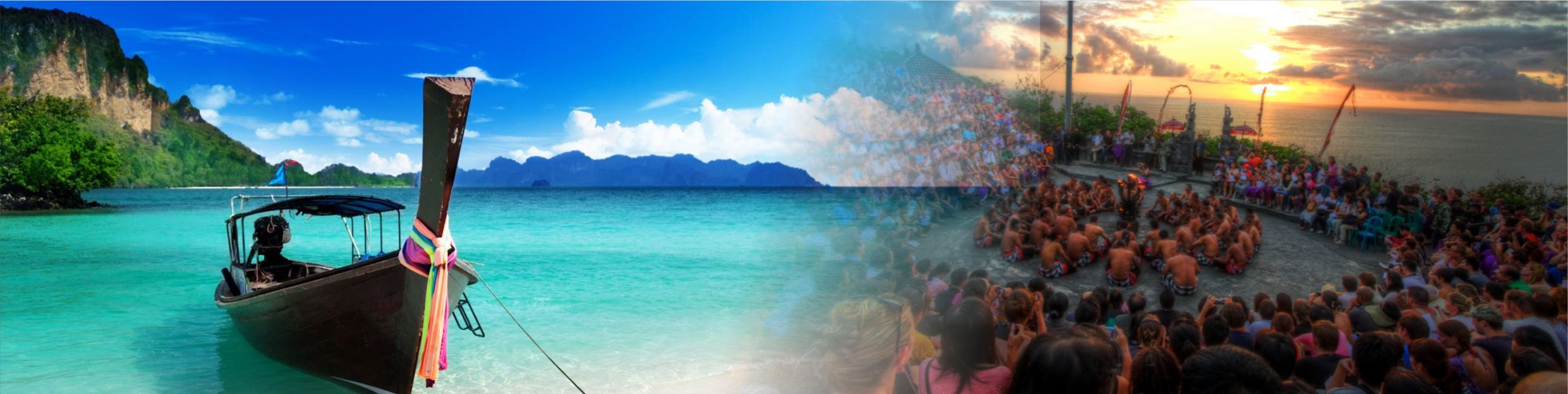
Tour Program
Dreamland
Dreamland Beach was the first surf spot and 'hidden' beach to rise to fame on Bali's southern Bukit peninsula. This was before its 400 or so hectares were opened to allow for the development of the Pecatu Indah Resort megaproject. Now open to the public, and dubbed 'New Kuta Beach', it still is home to some of the best reef breaks on the island, and continues to attract advanced wave riders from the world over. Although the waves are fit for pros, there are several surf classes available on the beach, offering quick riding lessons. Parasols are for rent, and a row of warungs serve refreshments, local cuisine and Western bites.
Garuda Wisnu Kencana
Garuda Wisnu Kencana, or GWK for short, is the name of a cultural park on Bali's hilly southern coast famous for the ongoing construction of a gigantic statue of Vishnu riding on the back of a 'garuda' (a supernatural eagle-like being). The completed part of the statue is of the upper part of Vishnu's body, the head of the 'garuda' and Vishnu's hands.
The cultural park has become one of the favourite places in Bali for art and cultural performances, exhibitions, and conferences. One of the best Kecak Dance performances in Ungasan Bali, and various culinary vendors, not to mention the complete selection of local souvenir shops to complement modern cultural experience are ready for the tourists. GWK, once completed at 145 metres, will be one of the world's tallest statues and erected on the top of the hill, with a magnificent panorama of Bali.
Jimbaran
Jimbaran is the perfect destination for romantic couples, seafood addicts, luxury tourists, and anyone looking for the perfect place to enjoy the sunset. This area is sometimes referred to as the 'Beverly Hills of Bali' because there are so many expensive Villas and top hotels.
Some of the most notable attractions in Jimbaran area include Jimbaran beach, Jimbaran Morning Market, Jimbaran Town, Jimbaran Cliffs, and Jimbaran Sunset which is spectacular on a clear evening.
Kopi Luwak Bali
As far as coffee goes, Bali's Kopi Luwak is perhaps one of the most unique and expensive coffees you can find. Kopi Luwak has a distinctive aroma - being naturally selected by our expert, the Asian Palm Civet. Coffee aficionados describe the taste as a very smooth, earthy coffee with hints of cocoa with an almost syrupy body.
Nusa Dua
Nusa Dua, was designed to be an 'all-inclusive' type of tourist destination. As well as a host of luxury hotels, Nusa Dua is home to the most popular golf course in Bali and the main convention centre on the island.
The beaches here are glorious - white sand, deep, long and safe for swimming. The public beach at Geger is the best to head to if you are not staying at Nusa Dua. This is also home to one of the best museums in Bali, Pasifika Museum, a splendid museum, and highly recommended for anyone interested in the art of Bali, Southeast Asia and the South Pacific region. Nusa Dua also have many attraction places, such as Water Blow, Serangan Island, Pandawa Beach and Blue Point Beach.
The name Nusa Dua is derived from the two small islands to the east. The enclave is an idyllic place for honeymooners and for those who bring the entire family. It is a place worth experiencing for yourself.
Pandawa Beach
Pandawa Beach, locally referred to as 'Pantai Pandawa', is a great addition to Bali's collection of gorgeous beaches, located on Bali's southern Bukit Peninsula. 'Hidden' behind large carved limestone cliffs that reveal wide views to the Indian Ocean, Pandawa Beach was once also dubbed as 'Secret Beach' and it was officially opened in 2012, fast-gaining popularity among local tourists and international visitors.
Pandawa Beach also have giant statue of "Pandawa" – crown prince from Hindu story "Mahabarata", believed at Hindu as the incarnation of God – at the giant holes of the cliff. First statue at the left was Dewi Kunti – mother of Pandawa, continued by Dharma Wangsa, Bima, Arjuna, Nakula and Sadewa.
The water at Pandawa Beach, as with most of Bali's southern coastline, is an exotic combination of blue and green, as local seaweed farmers still tend to their patches along these coasts. On clear days with mild winds, it is a great place to swim, or hire a sea kayak, do some life vests and paddle out for fun, and even grab a surfboard to catch a wave beyond the reef. Easily, this is one of the far-flung and exotic beaches to retreat a holiday in Bali.
Puja Mandala Nusa Dua – Pura Lima Ibadah
A cluster of houses of worship representing all of Indonesia's religions can be seen on a scenic hilltop close to Nusa Dua. This two-hectare slice, known as Puja Mandala (the domain of worship), is home to a Buddhist temple, a Hindu temple, a Catholic Church, a Protestant Church and an Islamic mosque. This complex bears witness to Indonesia's unique constitution, known as Pancasila, that gives equal status to each of the country's religions. Created in the early years of Indonesia's independence, the state code is depicted by five symbols on the national coat of arms, the central one being the star, the symbol of religious belief, though the religion is not specified.
Tanjung Benoa
is a tranquility traditional village located in Nusa Dua Peninsula flanked by the sea at both sides and white sand stretching along the coast. This area has changed much now from the previous conditions and continue to have the development where this place has been appointed as a marine sport center in Bali with variety of water activities available such as jet ski, banana boat, fly fish, snorkeling, parasailing, etc.
Tanjung Benoa is a very beautiful place blessed by the panoramic view of the sea and beach with calm seawater those are ideally for relaxation with your family. This area was formerly fisherman village with the simple life style, but now has changed with the tourism development where many hotels with world class including restaurants, spa and souvenir shops are available for tourists.
Uluwatu
Pura Luhur Uluwatu is definitely one of the top places on the island to go to for sunset delights, with direct views overlooking the beautiful Indian Ocean and daily Kecak dance performances. Balinese architecture, traditionally-designed gateways, and ancient sculptures add to Uluwatu Temple's appeal.
Without a doubt, what makes Uluwatu Temple spectacular is its cliff-top setting at the edge of a plateau 250 feet above the waves of the Indian Ocean. 'Ulu' means the 'top' or the 'tip' and 'watu' means a 'stone' or a 'rock' in Balinese. Several archaeological remains found here prove the temple to be of megalithic origin, dating back to around the 10th century. There are two entrances to Uluwatu Temple, from the south and the north.
Hosted by

Organized by